Spread the love
Benefits of Later Living
The Benefits for Chertsey and Runnymede
- The 2018 Strategic Housing Market Assessment (SHMA) projected that between 2015 and 2030, there will be 4,830 more people over the age of 65 in Runnymede.
- This will include people wishing to downsize and those needing specialist housing and support.
- There will be 480 more people living with dementia between 2015 and 2030 and 1,049 more people with mobility issues.
- This results in a total 750 new residential care units and bed spaces over this period, a figure which could increase between now and 2030.
- Policy SL23 states that “Residential care accommodation should normally be located within settlements where there is easy access to a range of services, e.g. shops, healthcare and social facilities” – 15 London Road is located within easy reach of such amenities and services.
- There is an expected under delivery over the course of the Local Plan of 15% of C3 units. 15 London Road will contribute to addressing this shortfall.
Health and Wellbeing Benefits of Later Living
Later living contributes to residents’ health and reduces the need to move to a care home. Research conducted by Churchill Retirement Living, McCarthy and Stone and Pegasus Life Group of 1,400 residents living in their developments found the following:
- Around 1.5 million people aged 50 and over are always or often lonely, researchers have calculated. Projections from Age UK suggest that this could rise to two million people within the next 10 years.
- Research has suggested that the impact of loneliness and isolation on mortality is equivalent to smoking 15 cigarettes a day.
- There are also much wider negative results to note, including that older people who are lonely are more than three times more likely to suffer depression and 1.9 times more likely to develop dementia.
- By maximising independence and increasing social interaction, all of these housing environments can improve the well-being and health of older people and so enhance their overall quality of life.
- Half of over 80s in the general population live alone. Yet those in homes for later living could be around half as likely to have falls.
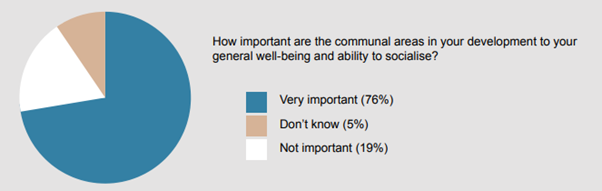
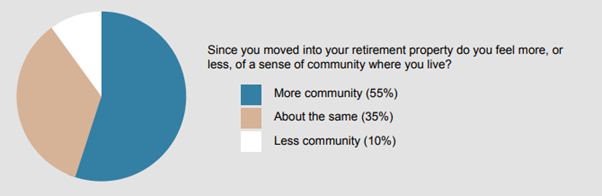
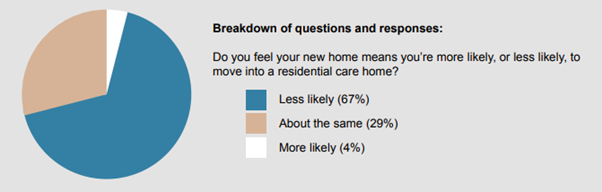
Reducing the burden on the NHS:
- The average person living in specialist housing for older people saves the NHS and social services £3,490 per year.
- Research by ExtraCare Charitable Trust in partnership with Aston Research Centre for Healthy Ageing (ARCHA) shows that on average those living in retirement accommodation will see their visits to the GP reduced by up to 50%.
- This contributes to a 40% reduction in NHS spending.
Revitalising the Town Centre:
- 15 London Street is well located to local amenities and shops.
- Research shows that 63% of residents’ annual expenditure is in local shops, giving a much needed boost to Chertsey, particularly following the COVID 19 pandemic.
- The residents of a typical 24 unit development would spend on average £185,000 per year in local shops and businesses, supporting jobs and the viability of High Streets.
- For a typical development of 45 units, around 85 construction jobs and 6 permanent jobs would be created.
Freeing up family homes:
- Around 1 in 4 over 65s have indicated that they wish to downsize, unlocking the potential for more existing family homes to be released on to the market.
- Roughly 2 in every 3 retirement properties built releases a home suitable for a first-time buyer. This means that around 16 family homes could be released in part due to the 24 units at 15 London Road, Chertsey.
- The 2017/18 English Housing Survey found that 67% of homeowners aged 65 or over live in an under-occupied property, equivalent to 3.6 million households in England.
- It also found that of all the households with homeowners aged 55 and over with at least two unoccupied rooms, more than half would consider downsizing.
Contact Us
If you have any queries, please contact James Newhall of SP Broadway on
07809 669387 or at james@spbroadway.com